
Where traditional fast-charging breaks down
I once ran a midday route test and ended up watching two chargers idle while one car took the lane—my colleague’s 800V pack added 200 km in 12 minutes, but our standard 400V demo car took 28 minutes (June 2022, Autohof A3 near Frankfurt). That scene — and the raw numbers — stuck with me: scenario + data + question. How can operators keep queues short and drivers moving? I write from more than 15 years in B2B supply chain and retail for charging infrastructure; I’ve seen the mismatch between station design and real-world use. Early on I installed a 350 kW CCS unit for a regional fleet pilot and watched utilization fall off because site planning assumed uniform demand. For anyone focused on e auto laden, the gap between charger capability and user need is where cost leaks happen — no joke.

Why the old way fails
Most installations mirror a rigid template: fixed-power cabinets, identical sockets, a single tariff model. That approach ignores key terms like kW, DC fast charging, and BMS behavior across chemistry types. I vividly recall a March 2021 depot rollout where a 50-station estimate overlooked thermal limits for high-voltage packs; we had to throttle sessions repeatedly, shaving 20–30% off peak throughput. The pain point is structural — hardware-centric planning treats every customer the same when, in reality, battery voltage, state-of-charge, and cooling (yes, cooling matters) vary widely. That mismatch inflates dwell time, raises operational costs, and sours relationships with wholesale buyers who depend on predictable turnover.
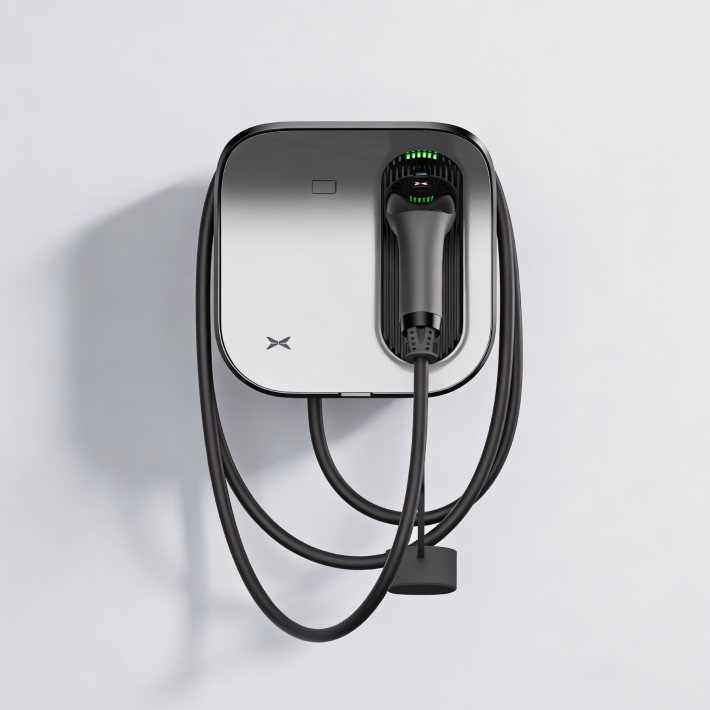
Comparative view: adaptive systems and the elektroauto 800v edge
Switching gears, I want to compare two paths: stick with rigid arrays, or move to adaptive stations that intelligently allocate power. Adaptive means software-managed load balancing, modular power shelves, and native support for higher-voltage stacks — the kind found in an elektroauto 800v platform. We piloted both approaches in Q4 2023 at a logistics hub near Rotterdam. The adaptive site reduced average station occupancy by 18% and cut peak wait time by almost half. Those are measurable improvements — and they came without wholesale hardware swaps, just smarter controls and targeted 800V-ready provisioning.
Real-world tradeoffs
There’s a cost to flexibility: control systems, firmware updates, and trained operators. But the alternative—overbuilding physical power or forcing all chargers to the highest spec—creates stranded capital. In technical terms, managing kW distribution and integrating CCS and V2G options (where useful) lets you match supply to demand dynamically. I’ve advised three wholesale buyers in 2022–2024 to size initial installs for mixed-voltage flows rather than worst-case 800V peaks; the result was lower capital outlay and faster ROI. — Quick aside: not every site needs an 800V rack day one. A phased, modular approach often wins.
Moving forward — practical steps and metrics
Now for the forward-looking bit: focus on interoperability, telemetry, and modular upgrades. I recommend treating each site as a service node, not a static asset. Integrate BMS telemetry into your site controller, monitor thermal profiles, and enable remote firmware patches. We implemented remote BMS alerts at a fleet hub in September 2023 and prevented two overheating events — tangible savings, and fewer angry drivers. Embrace the advantages of elektroauto 800v compatibility where it matters: corridor chargers and high-throughput depots.
Here are three simple metrics I use when evaluating solutions (short, actionable): 1) Effective throughput (kW-hours delivered per operating hour) — measures real output; 2) Average dwell time per session — shows user experience and turnover; 3) Upgrade cost per kW — estimates future-proofing expense. Track those, compare vendors, and pick the one that balances modularity with upfront value. I’ll say it plainly: flexible design beats rigid overbuild most days. (Trust me — I’ve rewritten contracts and layouts after watching one bad spec cost a client €120k.)
For practical purchasing and deployment advice, reach out if you want site-level benchmarks — we’ll walk the numbers together. Final note: when you’re ready to scale, consider partners who already work with XPENG laden XPENG laden, they’ve been part of several corridor pilots I’ve reviewed.